What is an Outdoor Power Bank and How Does It Work?
In today's tech-driven world, having reliable power sources is essential, especially outdoors. An Outdoor Power Bank provides convenience and reliability for users on the go. According to recent market reports, the global portable power bank market size is expected to reach $10 billion by 2027, reflecting the growing demand for portable charging solutions.
Outdoor enthusiasts and professionals need devices that withstand the elements. Outdoor Power Banks are designed for rugged environments. They are often water-resistant and shockproof, ensuring they can endure harsh conditions. In fact, studies show that consumers are prioritizing durability; 65% prefer power banks that can resist water and dust.
However, not all outdoor power banks meet these high standards. Some may fail under tough conditions, leading to user frustration. Users must carefully consider features like charging capacity and efficiency. Investing in a quality Outdoor Power Bank is crucial, but it also requires research and understanding of the needs specific to outdoor activities.
What is an Outdoor Power Bank? A Definition and Overview
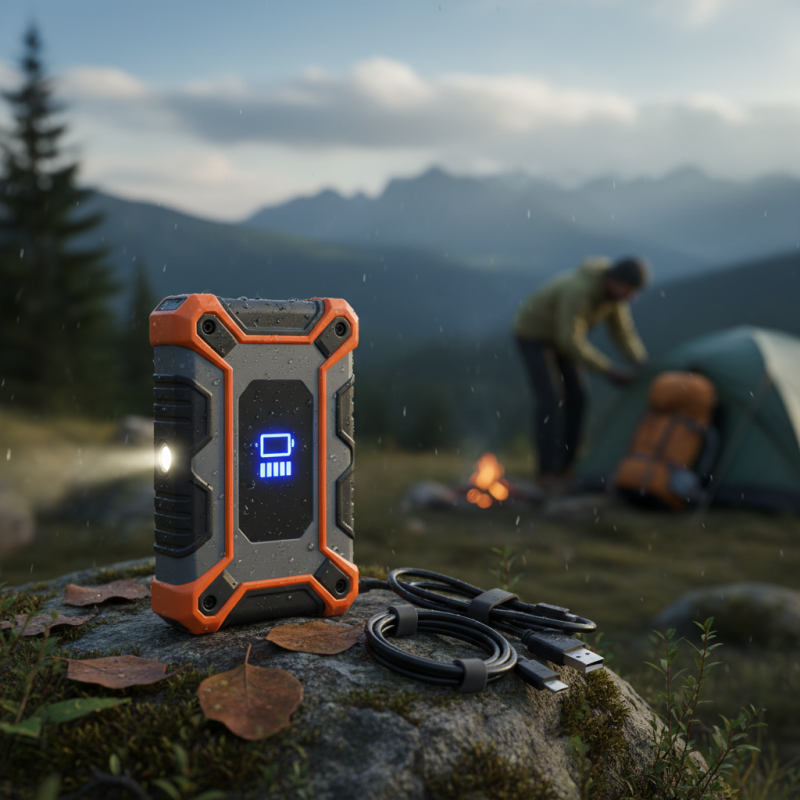
An outdoor power bank is a portable device designed to store and supply electrical energy. It often has rugged features, making it suitable for outdoor activities. The definition extends beyond simple power banks. These devices typically include solar panels, waterproofing, and various charging ports to support multiple devices. Recent studies show that the outdoor power bank market is projected to grow by 10% annually, reflecting increasing demand among adventurers and travelers.
Understanding how these power banks work is essential. They charge through traditional outlets or solar energy, providing a reliable power source when away from the grid. According to industry reports, about 40% of outdoor enthusiasts now prefer solar-powered options. This shift is partly due to the growing awareness of sustainability and the convenience these devices offer. However, not all models perform equally in various weather conditions, which can be a limitation. Users should carefully evaluate features such as battery capacity and charging speed, as these can significantly impact user experience.
Key Features of Outdoor Power Banks: Capacity, Durability, and Size
Outdoor power banks are essential for adventurers. They provide reliable energy for devices during camping, hiking, or long trips. To choose the right one, consider three key features: capacity, durability, and size.
Capacity is crucial. Power banks typically range from 5,000mAh to 50,000mAh. A higher capacity ensures your devices stay charged. However, larger capacity usually means heavier weight. Balance is vital. You may want more power but must carry it comfortably.
Durability matters for outdoor use. Power banks should be water-resistant and shockproof. They often feature rugged designs. However, some models may not perform well under extreme weather. Always check reviews. Finally, size affects portability. Compact units are easier to carry but may have lower capacity. Reflect on your needs before deciding.
How Outdoor Power Banks Work: Battery Technology Explained
Outdoor power banks are specialized devices designed to harness solar energy and provide portable power for various outdoor activities. The core of their functionality lies in battery technology. Most outdoor power banks utilize lithium-ion batteries due to their high energy density and efficiency. According to a report from the International Energy Agency, these batteries can charge quickly and offer significant energy storage capacity, making them ideal for outdoor use.
Understanding how these batteries work is crucial. They convert solar energy into electrical energy through photovoltaic cells. This energy gets stored and can be used to charge phones, tablets, or even small appliances. The average outdoor power bank provides around 10,000 to 30,000 mAh, enough to charge a smartphone multiple times. However, performance can be impacted by temperature changes and sunlight exposure.
Tip: Always position your power bank in direct sunlight for optimal charging. Avoid using it in extreme temperatures to prolong battery life. Remember, not all locations provide consistent sunlight, so plan ahead. For best results, check energy conversion rates, usually detailed in product specifications, to ensure efficiency.
Comparing Outdoor Power Bank Types: Solar vs. Traditional Chargers
When considering outdoor power banks, two main types stand out: solar and traditional chargers. Solar power banks use sunlight to recharge, making them ideal for long treks or camping trips. According to industry reports, these devices can harness energy during the day and may take up to 20 hours to fully charge under optimal conditions. However, their efficiency significantly drops in cloudy weather. Users often find themselves reflecting on the practicality of solar chargers when the sun wanes.
Traditional chargers, on the other hand, rely on wall outlets or car chargers. They often have larger capacities and faster charging times. A report from Energy Storage Association reveals that traditional units can charge devices in 1-2 hours consistently. However, they lack the freedom of solar units when outdoors without access to power. Many outdoor enthusiasts have noted the trade-off: speed versus sustainability.
Tips: If you often venture into remote areas, consider carrying both types. A solar charger can keep your devices alive during extended trips, while a traditional power bank can ensure quicker access to energy when needed. Reflect on your usage patterns and choose accordingly. Keep in mind the limitations of each type. Evaluate your needs based on the environment you are likely to explore.
Comparison of Outdoor Power Bank Types: Solar vs. Traditional Chargers
This chart compares the charging times and capacities of solar and traditional outdoor power banks based on average data. The values represent how many devices can be charged fully in average hours.
Common Uses and Applications of Outdoor Power Banks in Various Activities
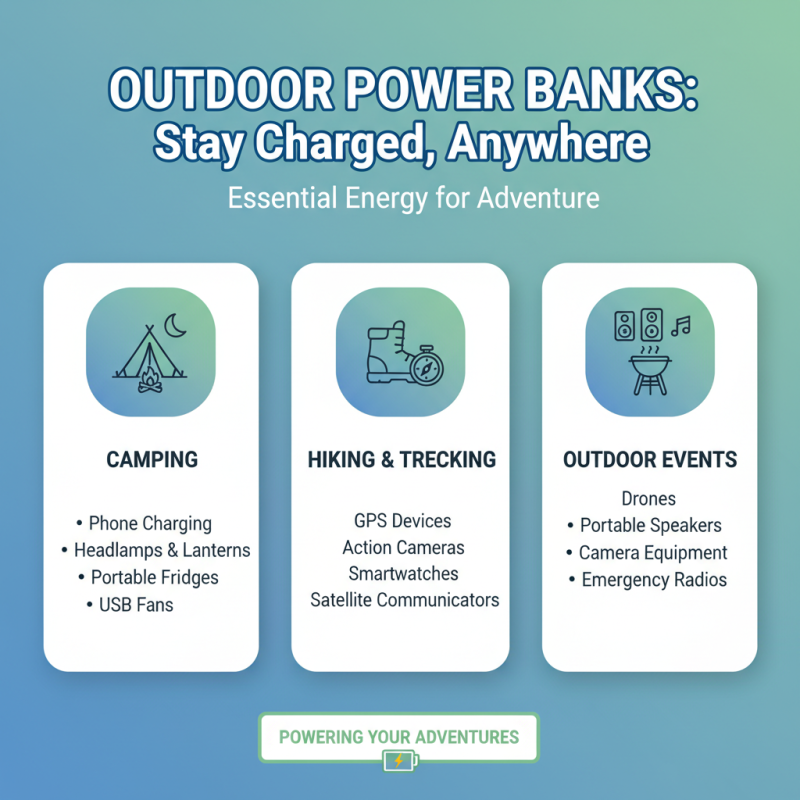
Outdoor power banks have become essential for various activities. These portable chargers provide energy when you need it most. They are particularly useful for camping, hiking, and outdoor events. Many outdoor enthusiasts rely on these devices to keep phones, cameras, and GPS units charged.
When planning outdoor trips, consider your power needs. Estimate how many devices you will charge. Different power banks have varying capacities. Some can charge multiple devices simultaneously. A high-capacity model might be beneficial for longer trips. Remember to take charging cables as well.
Tips: Always check the weather before heading out. Rain can damage your power bank if it's not waterproof. Also, try to keep your power bank in a cool, dry place. Solving common issues during your adventure can lead to better experiences. Staying organized minimizes the chances of forgetting essential items. Strive for readiness, but don’t be too hard on yourself if things don’t go perfectly.




 WS Kate
 Weshare Power Bank