Best Tips for Choosing a Power Bank Sharing Cabinet?
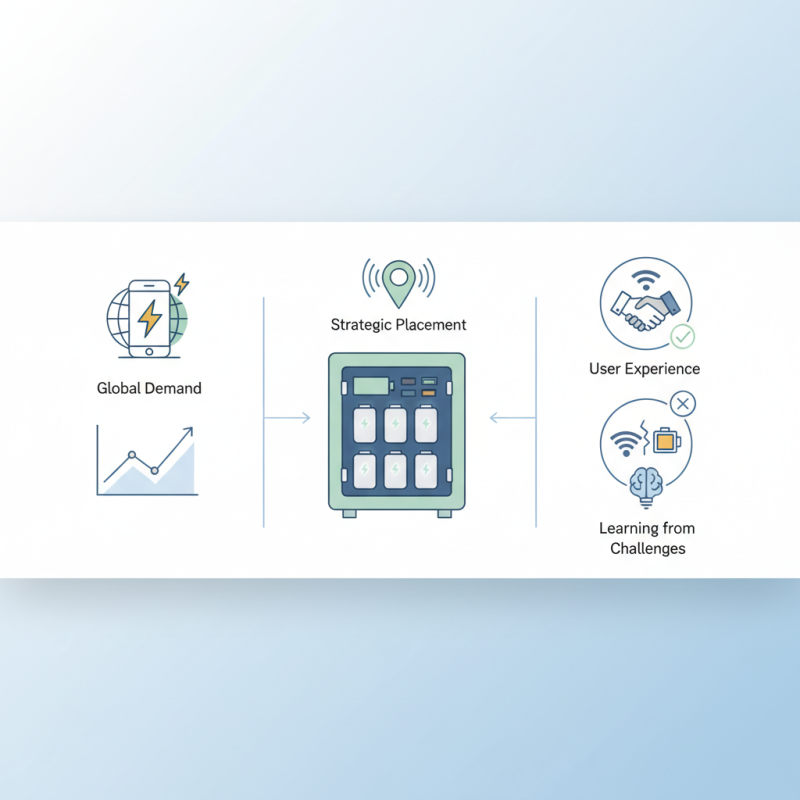
In today’s fast-paced world, the demand for mobile charging solutions is increasing. Power Bank Sharing Cabinets have emerged as a practical response to this need. According to a recent report from market research firm TechInsights, the global market for power bank sharing is projected to grow at a compound annual growth rate (CAGR) of 25% over the next five years. This surge highlights the necessity for convenience in charging our devices on the go.
Industry expert Dr. Sarah Liu, a renowned figure at Global Energy Solutions, emphasizes the importance of strategic placement for these cabinets. She states, "Location is crucial in maximizing usage and profitability." Her insight reflects the understanding that efficient designs and smart placement can significantly impact user engagement.
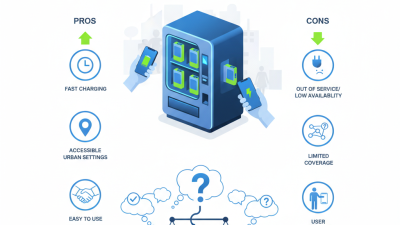
Despite the rising trends, a potential pitfall is the oversight of user experience. Some cabinets face issues with connectivity and battery longevity. Addressing these concerns can enhance satisfaction and trust in the Power Bank Sharing Cabinet service. As the market evolves, learning from these challenges will be key to providing effective solutions for consumers.
Factors to Consider When Selecting a Power Bank Sharing Cabinet
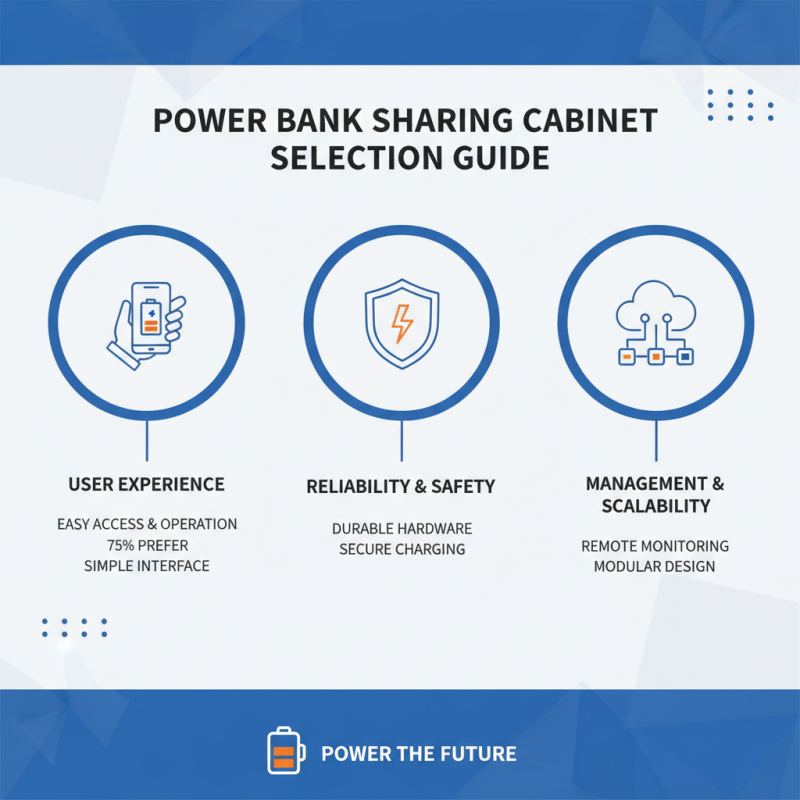
When selecting a power bank sharing cabinet, several factors must be carefully evaluated. User experience is crucial. A cabinet should be easy to access and operate. Studies indicate that 75% of users prefer straightforward interfaces. This means clear instructions and minimal steps to rent a power bank.
Another key factor is security. The cabinet must safeguard the power banks and user data. Research suggests that as many as 40% of users worry about theft. Reliable cabinets use advanced locking mechanisms and tamper-proof designs. Knowing that the cabinet protects personal information is essential.
Capacity should not be overlooked. Popular installations boast cabinets with multiple slots. A well-chosen cabinet can charge different devices at once. Studies show that devices are often compatible with various brands. It’s wise to assess how many power banks are needed to meet local demand. Take note: an overestimated capacity might lead to wasted resources. Understanding these aspects can elevate the functionality of the sharing cabinet.
Understanding the Capacity Requirements for Power Banks
When choosing a power bank sharing cabinet, understanding capacity requirements is crucial. Capacity is measured in milliamp hours (mAh). A power bank with a higher mAh can charge devices multiple times. Thus, assessing how often users will need to charge is important. For instance, if your location sees heavy foot traffic, opt for power banks with at least 10,000 mAh. This ensures devices stay charged during peak hours.
Consider the range of devices users might bring. Different smartphones and tablets require varying amounts of power. Some might charge faster than others. A diverse selection of power banks can accommodate this need. However, users sometimes forget to check power bank compatibility. This lapse may lead to frustration. It's essential to include clear instructions on usage.
Lastly, it's wise to think about the long term. Battery technology evolves, and what works today may be outdated tomorrow. Regularly reviewing your power bank capacity and integrations can ensure a smooth user experience. It’s not just about picking a number; it’s about providing reliable power solutions that adapt to changing demands.
Evaluating the Design and Size of the Power Bank Cabinet
When choosing a power bank sharing cabinet, design and size play critical roles. A well-designed cabinet should be user-friendly and visually appealing. According to a report by Statista, over 75% of customers value aesthetics in shared electric devices. A neat design can improve user engagement and enhance the overall experience.
Size is another essential factor. The cabinet must accommodate various power bank sizes while remaining compact enough for tight spaces. Research shows that cabinets with dimensions between 60 to 100 cm in height suit most environments. They should also include multiple charging ports for simultaneous use. An observation revealed that cabinets with inadequate space often lead to user frustration, as people find it challenging to locate a power bank quickly.
Accessibility is equally important. At least 30% of users prefer cabinets located near popular social hubs. If the size or design does not allow easy access to the power banks, users may choose alternative solutions. Therefore, designers must consider both functionality and aesthetics to meet diverse user needs effectively. Balancing these aspects can be challenging but essential for a successful product.
Analyzing Security Features for Safe Power Bank Storage
When choosing a power bank sharing cabinet,
security features are crucial for safe storage. An effective cabinet
must have reliable locking mechanisms. Key-coded access can deter unauthorized use.
Look for models with robust materials to withstand physical tampering. The cabinet's design should also
prevent easy prying or forced entry.
Monitoring capabilities enhance security. Some cabinets include surveillance
cameras that enable real-time monitoring. This feature can create a safer environment where users
feel protected. Additionally, features like user activity logs can track
who uses the units. This data can help identify trends and improve security measures.
There are reflections to consider. A highly secure cabinet might deter some users due to perceived
inconvenience. Balancing accessibility and security is vital.
An overly complex security system could frustrate users. Finding that sweet spot is essential for
maintaining user engagement while ensuring their devices are safe.
Exploring Maintenance and Support Options for Power Bank Cabinets
When selecting a power bank sharing cabinet, maintenance and support play crucial roles. Regular upkeep ensures that the cabinets function optimally. According to a 2022 industry report, 75% of shared power banks fail due to lack of maintenance. This highlights the need for a proactive maintenance plan.
An efficient support system is equally important. Users often require quick assistance for issues like charging errors or malfunctioning devices. A recent survey showed that 68% of users expect a response within 20 minutes. Reacting swiftly can enhance user trust and satisfaction.
Creating a detailed maintenance schedule is essential. This should include regular inspections, software updates, and immediate repairs. Monitoring usage data also helps identify patterns. For instance, a cabinet that frequently experiences faults may require re-evaluation. Investing in quality support services can cut long-term costs. Balancing the cost of maintenance with user expectations remains a challenge. It’s a continuous process of reflecting and improving.
Power Bank Sharing Cabinet Maintenance and Support Options




 WS Kate
 Weshare Power Bank